Douro Superior
One of the Douro sub-regions, marked by dry summers, harsh winters and mountain viticulture.
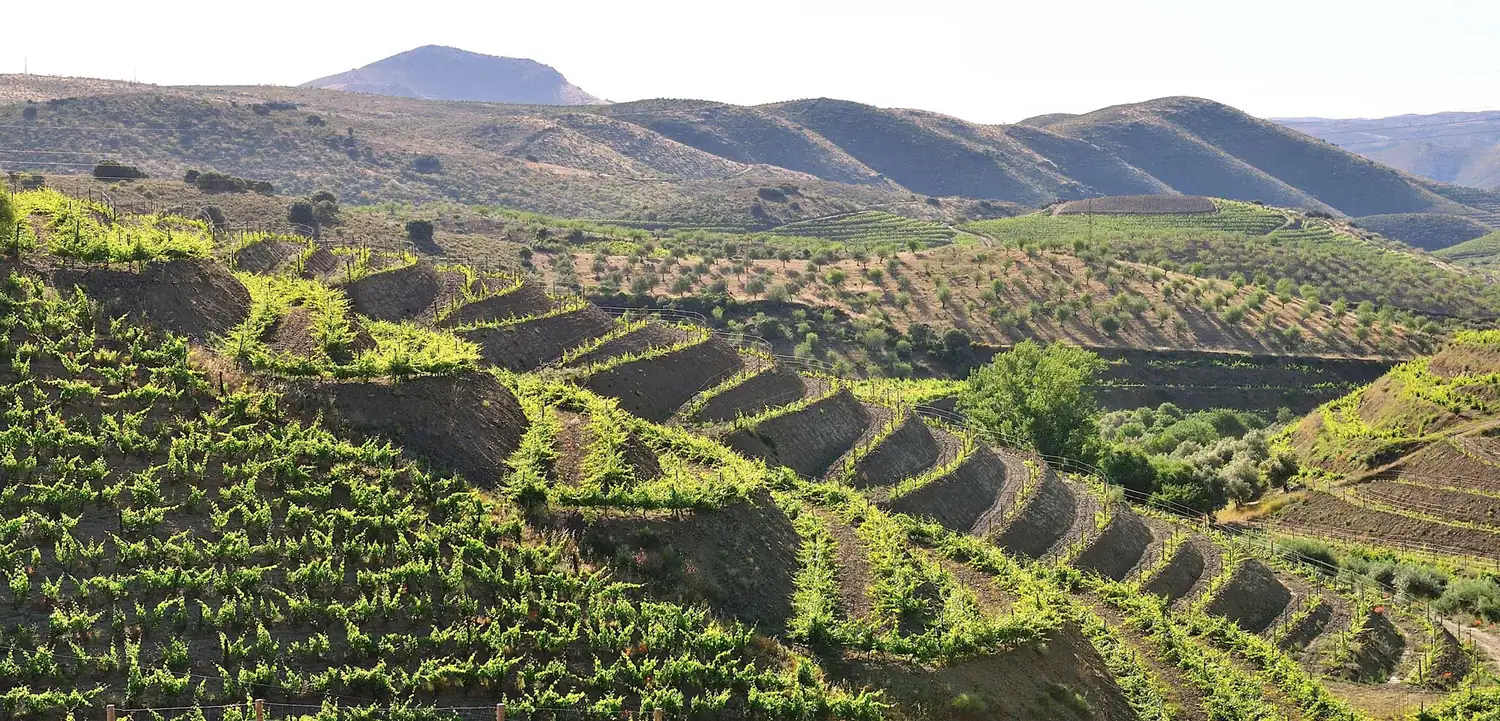
At the estate, Palato do Côa and the single-parcel editions are born of altitude vineyards, thermal range and schist soils veined with limestone. Vinhas do Côa is Douro DOC and combines grapes from two estates owned by the partners.
Altitude, climate and soil help define the ripening rhythm of each harvest.
One of the Douro sub-regions, marked by dry summers, harsh winters and mountain viticulture.
A territory of agricultural landscape and millennia-old human memory, recognised for its archaeological heritage.
High stoniness and different geological formations that help distinguish each plot.
Vines set between 300 and 400 metres of altitude, with different sun exposures.
Warm days and cooler nights that allow a gradual ripening of the grapes.
Palato do Côa and the single-parcel editions come from the estate; Vinhas do Côa is Douro DOC and combines grapes from two estates owned by the partners.
A scale that allows each harvest to be followed closely, from vine to final lot.
First wines made in Muxagata; the estate was acquired by the six partners in 2008.
Rabigato, Viosinho and Códega do Larinho in the whites. In the reds, Touriga Nacional, Touriga Franca, Tinta Roriz and Alicante Bouschet — one of the few teinturier varieties, with red pulp, adding colour and structure.
In the old vineyards, 46 varieties share the same plot, not all of them named. They were planted before anyone thought of separating them, and it is from that field blend that the Grande Reserva comes.
Altitude and the day-to-night temperature variation help preserve freshness and balance, in both the whites and the reds.
Each plot responds differently to soil, exposure and harvest. It is that diversity that guides the composition of the lots.
Quinta do Palato sits in Muxagata, at the heart of the Côa Valley — a territory of farmed landscape and millennial memory, in the innermost reach of the Douro.
Palato do Côa and the single-parcel editions use estate grapes; Vinhas do Côa is Douro DOC and combines grapes from two estates owned by the partners. Sourcing is declared by range.
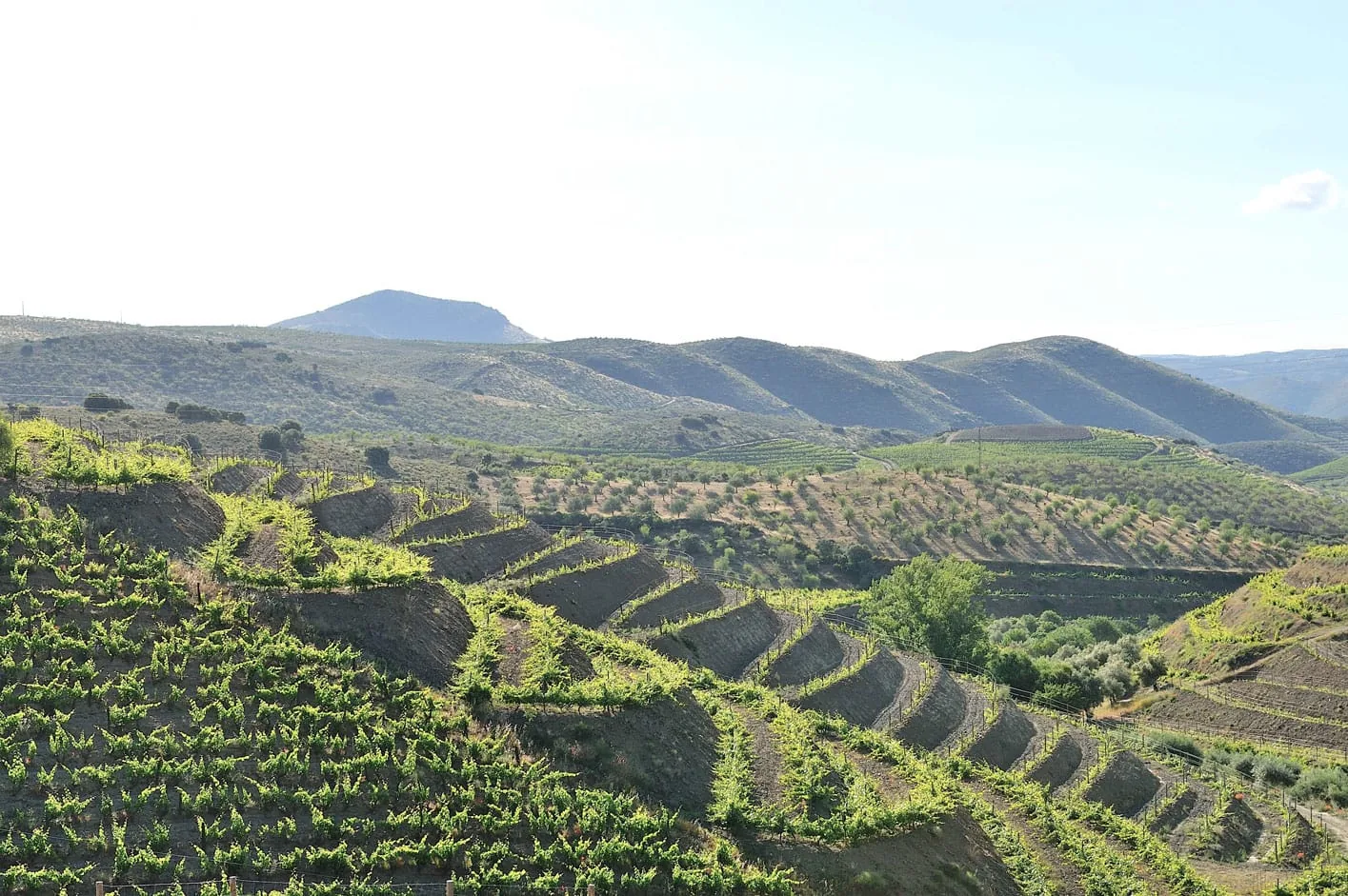 Terraces · Côa Valley
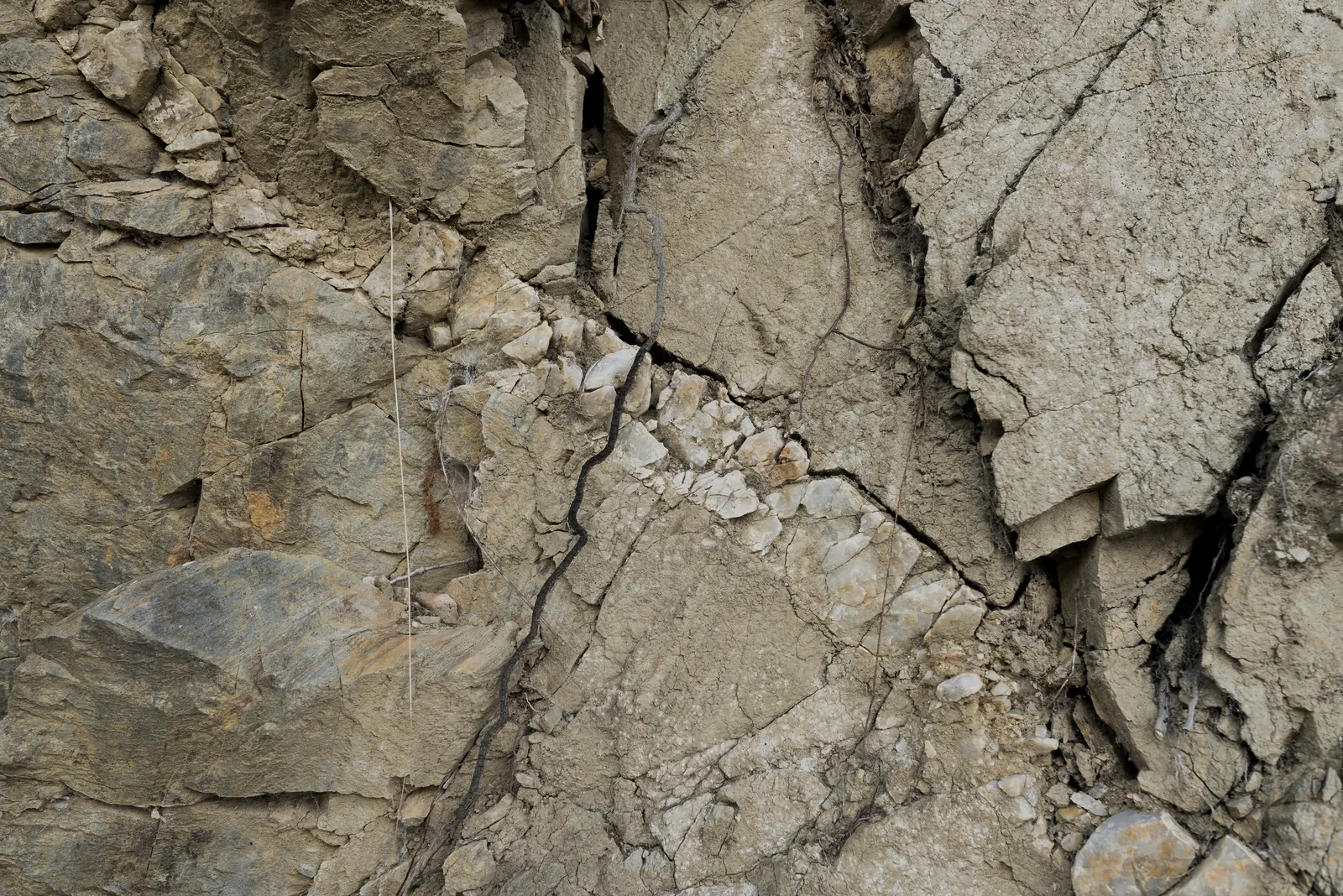 Schist soil
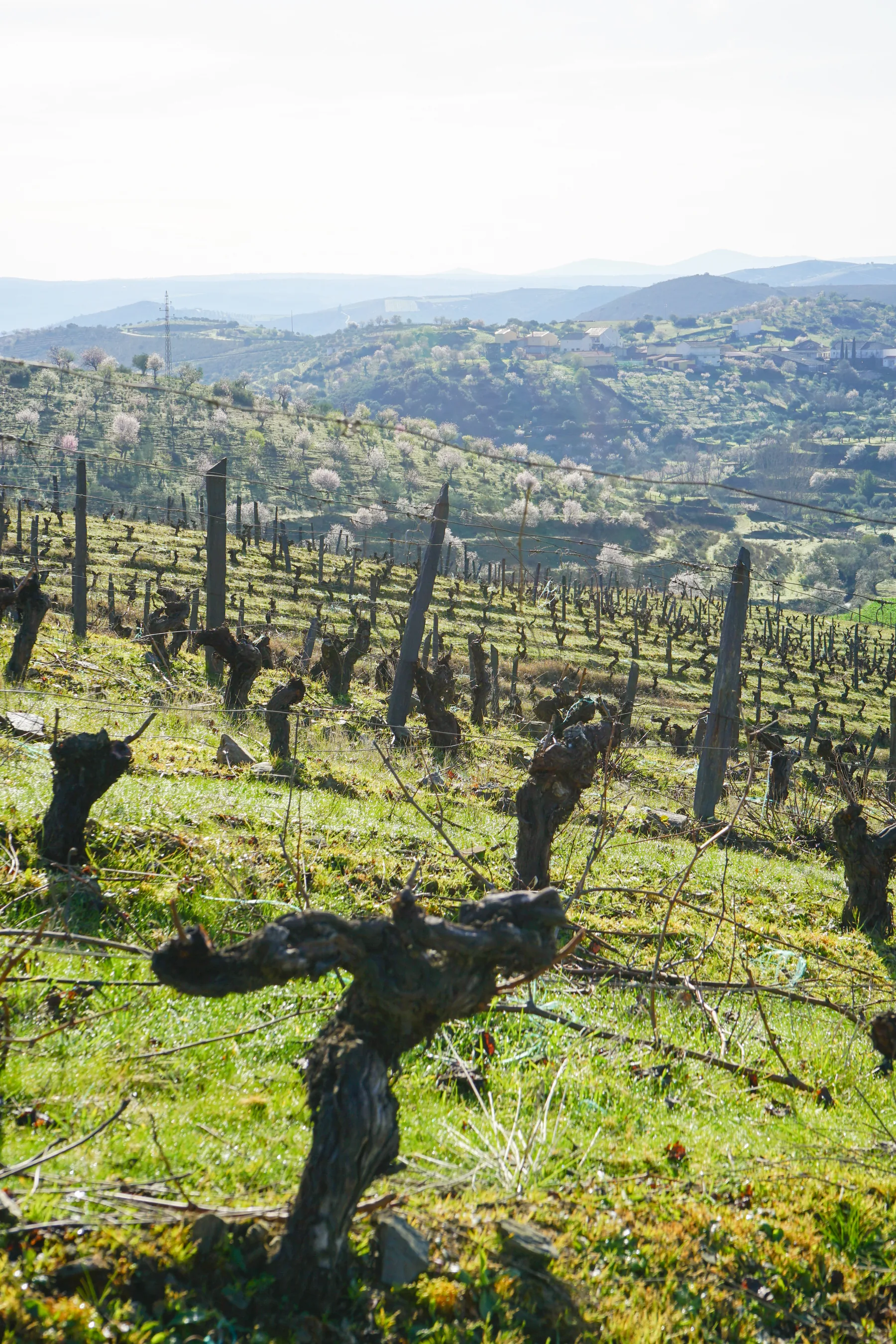 Old vines · estate grapes
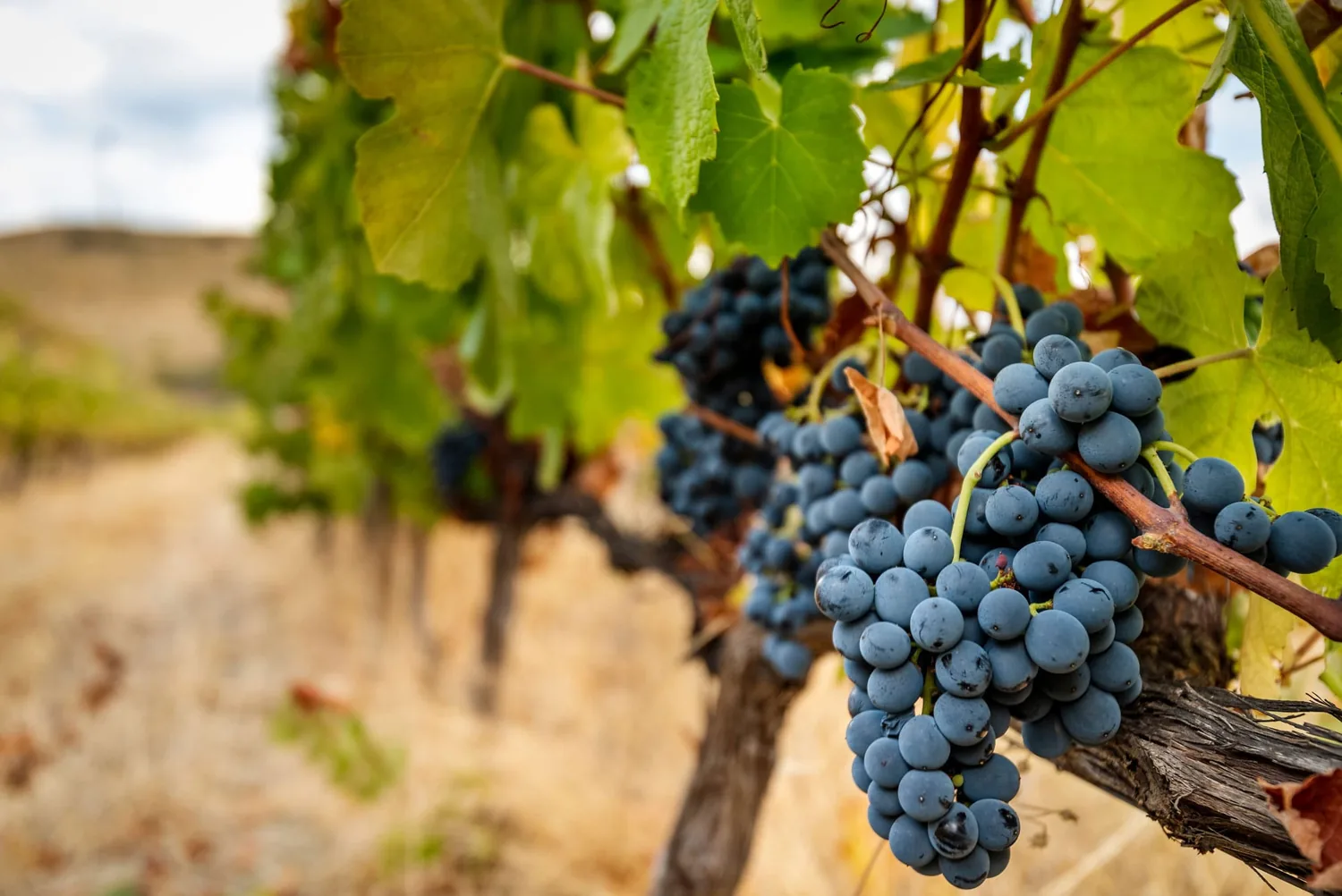 Harvest · Muxagata
The real story of Palato do Côa begins in 2007, with the first wines, and takes shape in 2008, when Carloto Magalhães and five friends acquired Quinta do Palato, in Muxagata.
3 artigos →Touriga Nacional, Touriga Franca, Tinta Roriz, Alicante Bouschet, Rabigato, Viosinho and Códega do Larinho — the grape varieties behind the Palato do Côa wines and what each one brings to the blend.
6 artigos →From the fresh white to the ageing red, a practical pairing guide to the Palato do Côa wines — based on the notes of each tech sheet and the house serving temperatures.
11 artigos →How the innermost frontier of the Douro was opened, mapped and named — from Dona Antónia Ferreira to the Côa river — until it gave rise to the wine born in Muxagata.
8 artigos →In the innermost reach of the Douro, the Côa Valley brings together schist soils, high-altitude vines and large day-to-night temperature swings. It is that terroir that gives the Palato wines their freshness.
4 artigos →Palato do Côa arrives in Brazil through Casa Santa Luzia, with a Douro portfolio with sourcing disclosed by range and limited production. For the trade, a guide to what the brand is and how to work with it.
Read →When and how we harvest at Quinta do Palato, in the Côa Valley — and what the harvest means in the glass. Content in preparation, updated as we document each harvest.
Coming soon →The Douro runs from east to west, through three sub-regions: Baixo Corgo, Cima Corgo and Douro Superior. It is in the innermost reach — the Douro Superior — that the Côa river flows into the Douro, and where Palato do Côa is born.
Tap each point on the map to follow the chain: from Dona Antónia’s frontier to the Cachão da Valeira, from the Côa Valley to Quinta do Palato.